What to Wear in the Wadi Rum Desert: Season by Season
What to wear in Wadi Rum comes down to one formula: light long layers for the day, a real jacket for the night, and closed shoes you can walk on sand and rock in. The good news is that the desert asks less of your wardrobe than you fear. Jeep tours carry you between stops, water and Bedouin tea are provided on most listings, and the camps hand you blankets. I live in Aqaba and cross into the valley a dozen times a year, and the travellers who look miserable are almost never under-dressed for the heat. They are the ones in flip-flops on a dune climb, or shivering at a June campfire in nothing but a t-shirt. Everything below works whether you book one of the Wadi Rum jeep tours we compare or arrive with a camp booking and no tour at all.
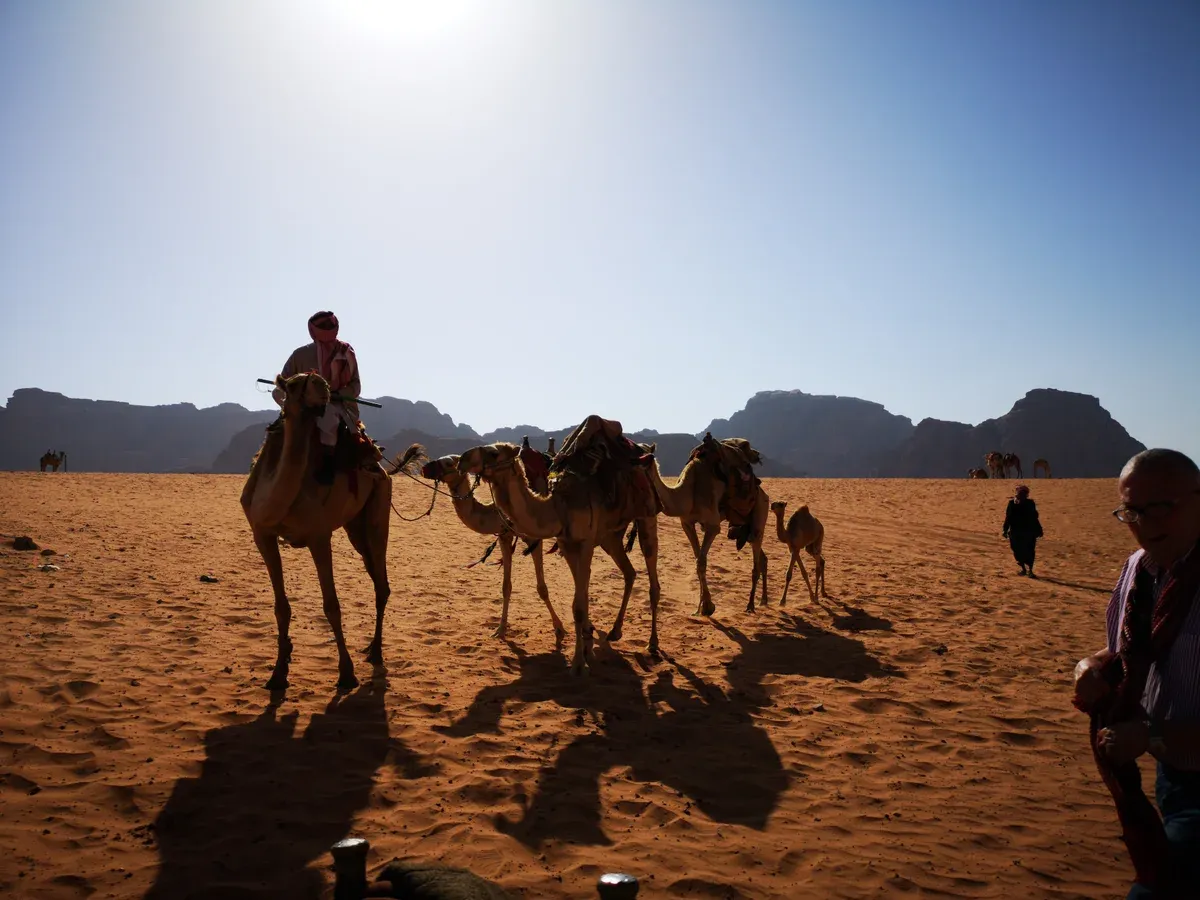
Photo: John Romano D'Orazio, CC BY-SA 4.0, via Wikimedia Commons
Quick answer
Wear loose, light-coloured long layers, closed-toe shoes, a sun hat and SPF 50+, and pack one warm layer for the evening because desert nights turn cold fast even after a hot day. Tours provide the jeep, water and tea. What stays on your list is sun protection, footwear and cash.
Key takeaways
- Jeeps, water and Bedouin tea come with the tour, so the gear burden is small
- Your real list is shoes, sun protection, one warm layer, and cash JOD
- Do not wear flip-flops or heeled sandals, the sand and rock will punish you
- July afternoons pass 38°C in the open desert, so midday sun coverage matters more than outfit choice
- Closed sneakers or light hikers beat sandals on every stop on a standard loop
- Winter nights drop to 0-5°C, so the seasonal packing delta is one serious jacket, not a new wardrobe
The Short List: What Goes in the Bag
I keep this list on my phone because friends ask for it before every trip south. It fits in a day pack. Nothing here is optional in my experience except the power bank, and that one becomes optional only if your camp has reliable sockets, which you cannot count on.
Camps may ration electricity, so a charged power bank is cheap insurance for a night of stargazing photos.
- Closed-toe shoes: sneakers or light hikers for sand and rock
- Sun hat: wide brim, the shade is worth more than the style
- SPF 50+ sunscreen: desert sun reflects off pale sand
- Sunglasses: wind kicks dust up at every jeep stop
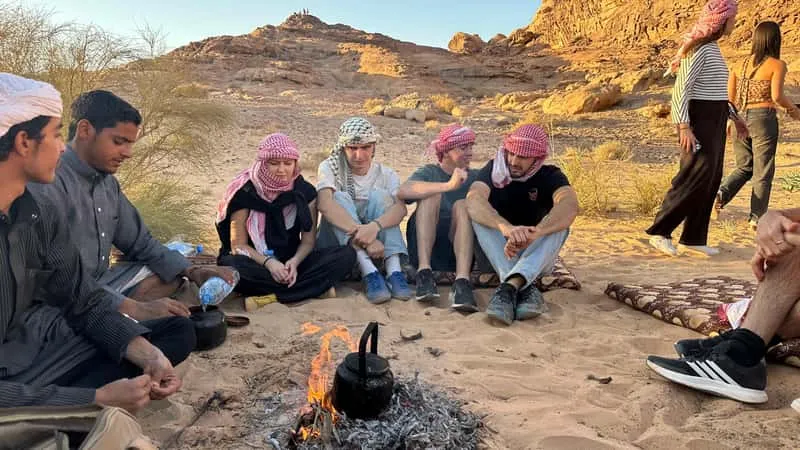
- Keffiyeh or scarf: sand, sun and cold wind in one piece of cloth
- Light long layers: loose cotton or linen beats bare arms in the heat
- Warm layer for camp nights: fleece or real jacket, even in summer
- Cash JOD: no ATMs in the village and cards are unreliable
- Power bank: camps may ration electricity overnight
- Lip balm: the dry air cracks lips within a day
Season by Season
The desert runs a huge daily temperature swing all year. Days are hot to warm, nights drop hard once the sun goes, and the swing is widest in winter. The table below is the one I send to people packing for the valley.
Day figures are typical daytime highs, night figures are what you feel after sunset at camp. Winter packing borrows from autumn trips, and the crossover is easiest to see in the best-time guide. Camp nights deserve their own read too: the camps guide covers what each tier provides, so you do not carry a sleeping bag a bubble dome already includes.
| Season | Day | Night | Wear this |
|---|---|---|---|
| Winter (December to February) | Around 15°C to 17°C | 0°C to 5°C | Long trousers, long sleeves, a warm jacket for camp, beanie for the evening, closed shoes. Rain is rare but brief showers happen. |
| Spring (March to May) | 21°C to 32°C | Cool at camp | Loose long layers you can shed by mid-morning, sun hat, light fleece for evening. Sandstorms and wind are possible in spring. |
| Summer (June to August) | 36°C to 38°C, after passing 40°C in open desert | Warm but not hot | Lightest loose clothing you own, long sleeves for sun, hat and sunglasses non-negotiable, book morning or sunset slots rather than midday. |
| Autumn (September to November) | 33°C down to 20°C | Cool at camp | September is summer clothing, November needs the light jacket back. A light fleece covers October nights. |
One pattern worth internalising: the difference between the day high and the camp night is 20 to 30 degrees in most months. Pack for both halves of the same day. If your itinerary runs from a sunset jeep loop straight into dinner at camp, the jacket that felt absurd at 3 pm is the item you will be thanking yourself for at 9 pm.
This is also why morning starts feel so good. Morning air is cooler and the routes are emptier, so a light layer you peel at the first stop is a better plan than shorts from the car park.
Tours Where Clothing Choices Matter
Some tours make your outfit work harder than others, usually because they add walking, climbing or a camel. These three are the ones where I would think hardest about shoes and layers before booking.
 from $40
4-Hour Wadi Rum Jeep Adventure: Bilingual Guide, Viewpoints & Bedouin Tea
Cover Wadi Rum's most photogenic viewpoints in four hours with an English and Arabic-speaking guide who brings the desert's history and Bedouin culture to life at every stop…
- English & Arabic-speaking guide
- Top viewpoints & short hike stops
- Water & Bedouin tea included
 from $60
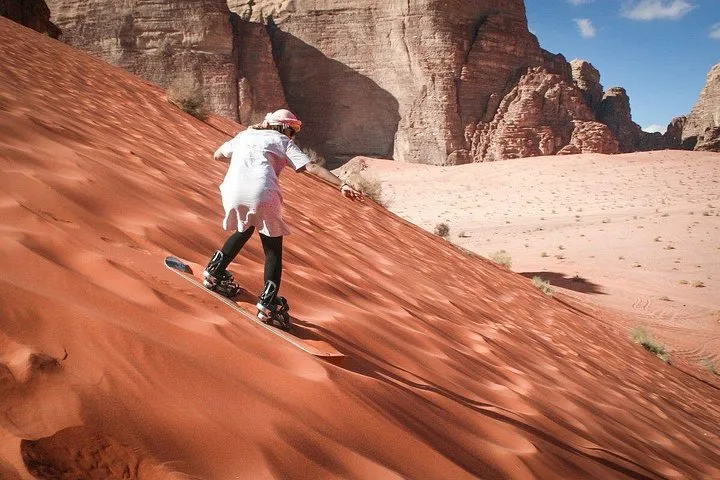
Wadi Rum Half-Day Jeep Tour with Camel Ride and Sandboarding
A 4-hour jeep circuit of Lawrence Spring, Little Bridge and the red dunes with a camel ride leg, sandboarding and Bedouin tea included. The simplest way to add…
Starts and ends in Wadi Rum Village; transfers not included
- Camel ride leg between jeep stops
- Sandboarding on the red dunes
- Lawrence Spring and Little Bridge
 from $70
Wadi Rum Half-Day Jeep Tour with Overnight in a Luxury Tent
A 4-hour jeep loop over the highlights with free sandboarding, then the night in a luxury Bedouin tent with a private bathroom. Suits travellers who want an overnight…
Tents have private bathrooms; starts at the Wadi Rum Rest House
- Overnight in a luxury tent with private bathroom
- 4-hour jeep highlights loop
- Free sandboarding and Bedouin tea
Shoes: The One Decision That Ruins Trips
If I could fix one packing mistake in the valley, it would be footwear. The standard jeep loop looks like a sitting tour from the itinerary, but every stop involves sand underfoot and most involve a short walk or scramble. Khazali Canyon has a narrow sandy floor you walk between inscriptions around 2,000 years old.
The Um Fruth Rock Bridge rises about 15 m and visitors climb it. The red sand dunes invite a run up the face, which is where flip-flop wearers turn around halfway and hobble down. On dune climbs the sand swallows soft shoes whole, and in Khazali Canyon the floor is stone.
Guides notice footwear at the first stop, because that is where the slow groups form. Two pairs help if you are staying overnight: one for the day, one dry pair for camp, because sandals around the fire feel better than sand-filled shoes after sunset. Break shoes in before the trip, since new leather on a dune climb is the classic blister story.
Socks matter as much as shoes in summer, when a thin merino pair dries overnight and cotton never does.
Sneakers or light closed-toe hikers handle every stop on a normal loop. They fill with sand, so shake them out and move on, or bring thin socks you do not mind emptying. Sandals with a secured strap are fine back at camp.
Flip-flops, slides and heeled sandals are genuinely poor here: no grip on rock, no protection from hot sand in summer, and they vanish in soft dune sand. A shoe with a sole you can feel the ground through beats everything.
Hiking boots are worth bringing only if you plan the full-day itineraries with real hiking legs, such as the jeep and hiking day capped at six travellers with a Bedouin lunch cooked in the desert. For the half-day loops, sneakers are enough and lighter to carry. If your tour includes sandboarding, any closed shoe works, and boards are carried by the operators free on several listings, including the jeep and camel half-day.
Dress Code and What Women Wear
There is no formal dress code inside the protected area. It is a desert, not a mosque, and nobody will turn you away from a jeep for wearing shorts. What does exist is village modesty.
Wadi Rum Village is a small community, and the camps are Bedouin-run, so loose clothing that covers shoulders and knees reads as respectful, especially for women. Loose is the operative word. A flowing long skirt or wide trousers are cooler in the heat than tight leggings, and local women dress this way for a reason.
For women specifically: loose long trousers or a maxi skirt, a breathable top with covered shoulders, and a scarf or keffiyeh for sun is the standard local-informed kit. You will not be harassed for showing more, but I have watched dozens of travellers adopt the scarf by day two because it simply works better. The keffiyeh is the single most versatile item in the desert.
It blocks sun on the neck, keeps sand out of your mouth when the jeep is moving, doubles as a cushion on a dune, and warms your head after dark. You can buy one in the village for a few dinars if you forget.
Men: the same logic applies. Light long trousers and a shirt with sleeves beat a tank top and burning shoulders every time. Locals in the valley wear loose layered cloth in full summer heat, and the physics are on their side.
Five Things People Forget
These are the five items that come up again and again in messages from readers who already booked and are packing the night before. The list looks long until you pack it: everything above fits a daypack, and the jeep carries the rest. The one thing to buy in Jordan rather than at home is the keffiyeh, because village shops stock the real cotton ones for a few dinars and the scarf earns its place on every single ride, against sun at midday and cold wind after dark.
| Wear this | Skip this | Why |
|---|---|---|
| Closed-toe walking shoes | Flip-flops or fashion sneakers | Deep sand and stone canyon floors |
| Light long layers | Heavy cotton | Sun cover without weight; cotton stays wet |
| A sealed sunglasses frame | Wire frames that open | Fine sand gets through every gap |
| A real jacket for camp night | A hoodie at best | Winter camp nights sit near zero |
| Cash in small JOD notes | Cards | No ATM in the village, gates take cash |
First, cash in JOD. The protected area entry fee is 5 JOD per foreign adult, about $7, paid at the Wadi Rum Visitor Centre gate, and children under 12 enter free. A Jordan Pass bought before arrival waives that fee.
Once inside, there are no ATMs in Wadi Rum Village and cards are generally not accepted in the reserve, so whatever you plan to spend on tea, scarves or tips needs to be in your pocket. Second, a power bank. Camps may ration electricity and your phone is your camera, torch and map.
Third, lip balm. The dry air is no joke and everyone underestimates it. Fourth, a real jacket for the camp night, not a hoodie you wore to the airport.
Winter nights sit at 0 to 5°C and even summer evenings cool enough that you want sleeves at the fire. Fifth, sunglasses that actually seal around the face. Open jeeps move fast and the dust finds ordinary fashion frames.
Frequently Asked Questions
How to dress in Wadi Rum?
Loose, light-coloured layers that cover shoulders and knees, closed-toe shoes, a sun hat and sunglasses, plus one warm layer for the evening. Tours provide the jeep, water and tea, so your clothing only has to handle sun, sand and the temperature drop after dark.
Can you wear shorts in Wadi Rum?
Yes, there is no rule against shorts and you will see plenty of them. Quick-dry material is smarter than denim, and long loose layers are genuinely cooler in full sun. Save the shorts for camp and wear covered legs for the jeep loop.
What to wear in Wadi Rum in summer?
The lightest loose clothing you own, long sleeves for sun coverage, a wide-brimmed hat and sealed sunglasses. Daytime highs run 36 to 38°C and open-desert afternoons pass 40°C, which is why I recommend morning or sunset departures over midday loops in June through August.
What should women wear in the Jordan desert?
Loose long trousers or a maxi skirt, a breathable top covering the shoulders, and a scarf for sun. There is no enforced code in the desert itself, but the village and the Bedouin-run camps are modest communities and loose coverage reads as respectful.
Can I wear jeans?
You can, but I would not. Denim is heavy, hot in the sun and miserable if it gets damp, and sand works into every seam. Loose quick-dry trousers or cotton will make the same day feel ten degrees cooler.
What shoes should I wear on a jeep tour?
Sneakers or light closed-toe hikers. Stops like Khazali Canyon and the dunes mean walking and scrambling on sand and rock, and flip-flops fail at all of it. Sandals are fine back at camp only.
Do I need to buy a keffiyeh before I arrive?
No. They are sold in Wadi Rum Village for a few dinars, and buying one there is part of the fun. Bring a scarf from home only if you want to skip the shopping stop.
What should I wear on a half-day tour with a camel ride?
Long trousers, covered shoulders and closed shoes. On the 4-hour bilingual tour guide and the camel-combination half-days, you are mounting and dismounting a camel, and bare legs plus camel hair is an itch you do not want. The month changes the packing list more than anything else: the best-time guide gives the temperatures behind each layer.