Best Time to Visit Wadi Rum: Month by Month
The best time to visit Wadi Rum is March to May and September to November, when day highs sit between 20 and 33 degrees, nights stay comfortable and the desert routes are busy but not packed. June to August works only if you accept early starts, because afternoons in the open desert push past 40 degrees. December to February brings cold nights near freezing, but also the emptiest valley and the clearest skies of the year. I live in Aqaba and drive north to the valley in every season, and the month you pick changes the trip more than anything else you decide. For a quick overview of the routes themselves, start with our guide to Wadi Rum jeep tours.
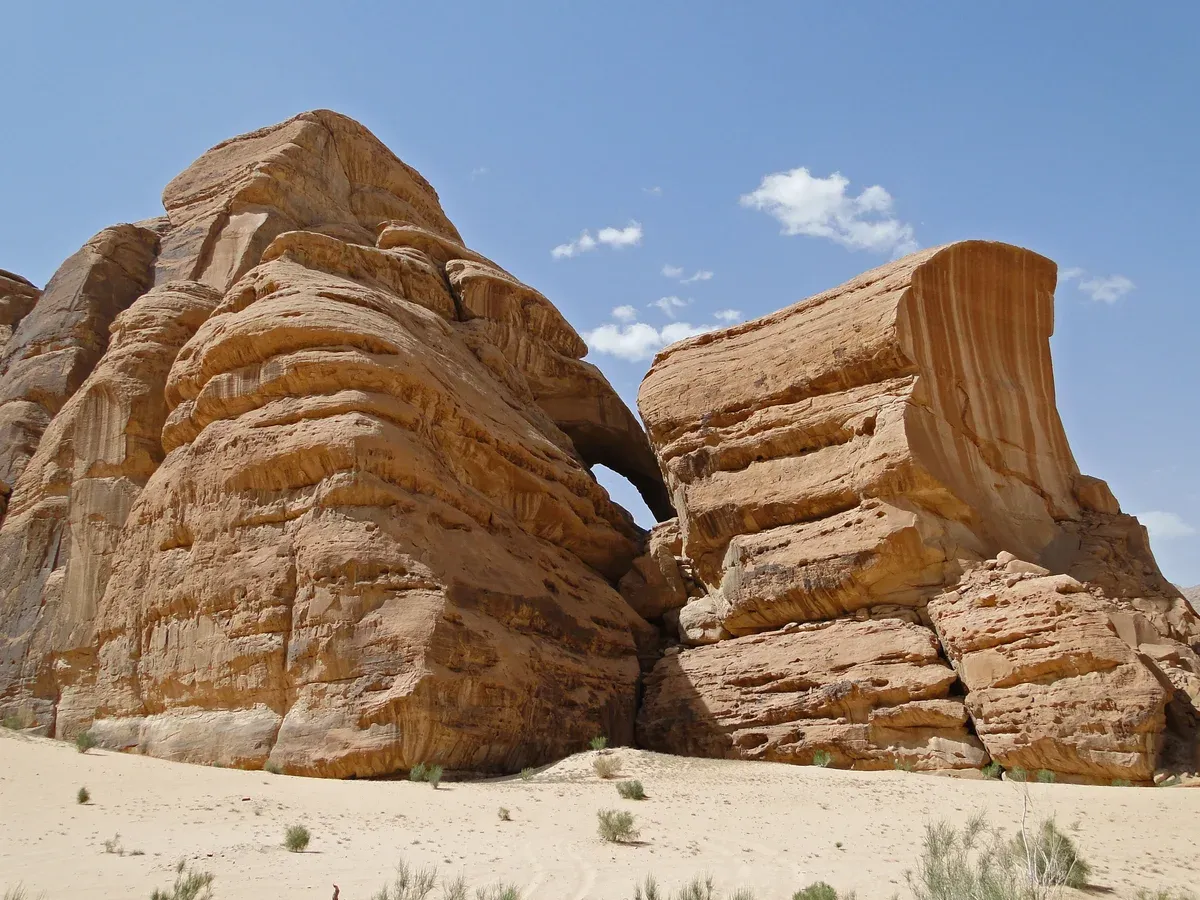
Photo: Bernard Gagnon, CC BY-SA 3.0, via Wikimedia Commons
Quick answer
The best time to visit Wadi Rum is March to May or September to November. Day temperatures sit in the low 20s to low 30s, nights are mild, and both the sunset light and the stargazing are at their most reliable. The one reason above all others is temperature: the desert is enjoyable when you can walk between stops without heat stress, and that window delivers it.
Key takeaways
- Best window: March to May and September to November, chosen mainly for daytime temperatures between the low 20s and low 30s
- Shoulder trade-off: December to February is colder (nights 0 to 5 degrees) but quieter and cheaper
- Avoid the core of the day from June to August, when open-desert afternoons pass 40 degrees and full-day tours become genuinely uncomfortable
- Counterintuitive fact: rain rarely spoils a trip here. Brief winter showers are the only rain the desert gets, and spring wind and sandstorms are a bigger practical risk than water from the sky
- Best time of day: morning slots are cooler and emptier, sunset slots give the deepest colour on the sandstone
- Price signal: overnight packaged deals run from $65, and winter dates often have the most availability per listing
Month by Month: What the Desert Does
Typical patterns, not forecasts
These are typical desert patterns for Wadi Rum, not forecasts. The protected area sits about 60 km north-east of Aqaba and its interior has no paved roads, so conditions feel sharper here than in town. I have split the year the way a driver would plan it.
Treat every number below as an average day, not a promise for your dates.
| Month | Typical day high | Night | What it means for a desert trip |
|---|---|---|---|
| January | 15C | 0 to 5C | Cold mornings, empty valley, pack real layers for camp |
| February | 17C | 0 to 5C | Similar to January with slightly warmer afternoons |
| March | 21C | cool | Season opens, spring wind and sandstorms possible |
| April | 27C | mild | Best all-round month for most travellers |
| May | 32C | mild | Warm days, still workable if you start early |
| June | 36C | warm | Afternoons pass 40C in the open desert, mornings only |
| July | 38C | warm | Hottest month, morning and sunset slots only |
| August | 38C | warm | Same as July, book nothing midday |
| September | 33C | mild | Heat eases, autumn season begins |
| October | 27C | cool | Peak month for good reason, book ahead |
| November | 20C | cool | Cool days, longest comfortable touring hours |
| December | 15C | 0 to 5C | Cold nights, clearest skies, fewest people |
Departures That Suit Each Season
The month you choose should shape which departure you book, not just what you pack. These three cards cover the three patterns that work in every season: a half-day slot in the cool hours, an overnight that catches both sunset and sunrise, and a stargazing session that depends on clear skies rather than warm air.
 from $43
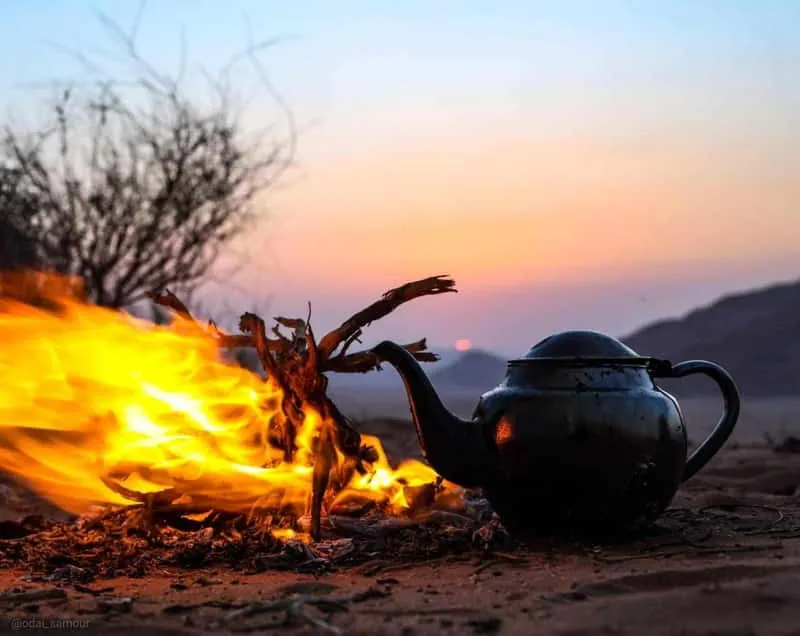
Half-Day Wadi Rum Jeep Tour: Morning or Sunset with Bedouin Tea
Explore Wadi Rum's most iconic landmarks (Khazali Canyon, Lawrence Spring, and the towering red cliffs) on a 4x4 jeep tour with an expert Bedouin driver. Choose a morning…
- Khazali Canyon & Lawrence Spring
- Traditional Bedouin tea at campfire
- Morning or sunset timing available
 from $65
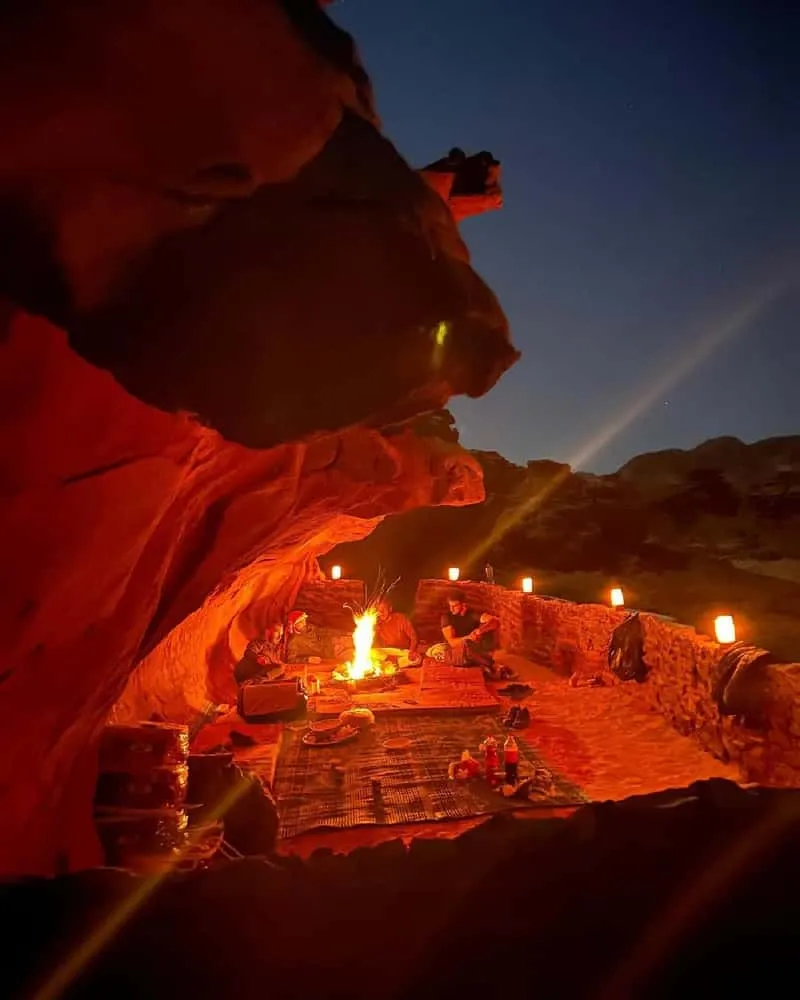
Wadi Rum Full-Day Jeep Tour + Overnight Camp with 3 Meals
Spend a full day on a guided jeep safari through Wadi Rum's dramatic dunes and rock formations, then stay the night at a traditional Bedouin camp beneath a…
- Full-day jeep safari through the desert
- 3 meals including Bedouin dinner
- Overnight stargazing at camp
 from $30
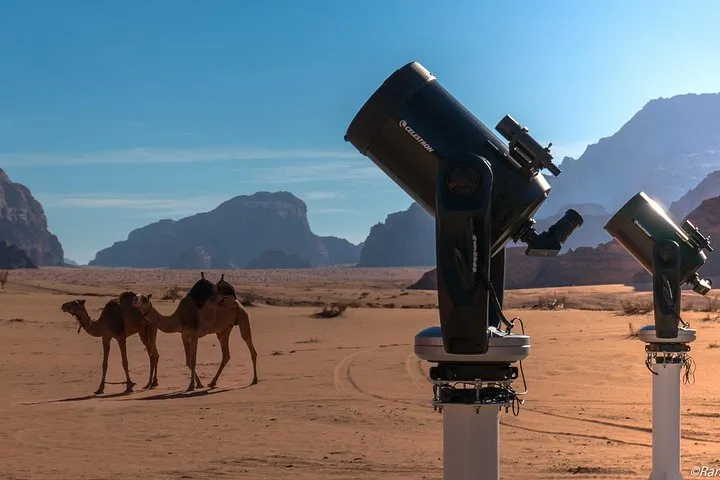
Wadi Rum Stargazing Tour at the RumSky Observatory
A 90-minute astronomer-led session at the RumSky observatory with large telescopes and a laser-aided naked-eye tour of a sky with almost no light pollution. The easiest add-on to…
Astronomer-led session in a seated observatory hall; max group 120
- Large telescopes with a professional astronomer
- Laser-aided naked-eye stargazing
- Free pickup from most local camps
Spring and Autumn: Why They Win
March to May: the valley wakes up
Spring is when Wadi Rum at its most comfortable. Day highs climb from 21 degrees in March to 32 by May, so you can walk into Khazali Canyon or scramble at Um Fruth Rock Bridge without roasting. The honest trade-off is wind.
Spring sandstorms and windy spells are the most common way a desert day goes sideways here, more than rain ever is. Book the half-day format in spring, like the half-day sunset slot, so a windy afternoon can be shifted rather than endured. Availability is good in March and tightens by May.
September to November: the reliable one
Autumn is the window I recommend first to friends. September cools from the August peak to a 33-degree high, October settles at 27 and November drops to 20, which means full touring days without heat management. Evenings turn cool enough that a camp fire feels earned rather than decorative.
The trade-off is demand. October is the busiest month of the year in the valley, so popular slots sell out first. An overnight format suits autumn best, and the 2-day jeep and camp packs a full safari day, three meals and a night under the stars for $65.
Bring a light jacket from October onward, because the temperature swing between afternoon and night is real.
Summer: What Actually Happens Past 40 Degrees
June to August, told straight
Summer afternoons in the open desert pass 40 degrees. Full-day tours in these months are genuinely uncomfortable, and I say that as someone who has done one in July. The sand radiates the heat back at you and there is almost no shade between landmarks.
What still works is the edges of the day. Morning slots run in tolerable air, and sunset departures catch the best light as the temperature finally drops. A short loop such as the stargazing session at the RumSky observatory also works well in summer, because it runs after dark when the desert has cooled.
If summer is your only window, book mornings or sunsets, carry more water than you think you need, and skip any itinerary that keeps you out through midday.
Winter: Cold Mornings, Empty Valley
December to February
Winter is the underrated season. Day highs of 15 to 20 degrees are perfect walking weather, the valley is at its emptiest, and prices and availability both work in your favour. Nights drop to 0 to 5 degrees, so camp stays are only pleasant if you take layers seriously.
Bring a proper fleece or down jacket, warm socks and something for your head, because desert camps are built for airflow, not insulation. The reward is the sky. Winter nights are the clearest of the year, and with near-zero light pollution the Milky Way is visible to the naked eye.
Rain is rare and comes as brief winter showers, rarely enough to change a plan. If you want silence, stars and space, winter delivers all three. Camps stay open all winter, and the camps guide shows which tiers have real heating.
Pick Your Month by What You Want
If You want the darkest stargazing skies
Aim for December to February. Winter nights are the clearest of the year and the desert sky has near-zero light pollution, so the Milky Way shows to the naked eye.
If You want to hike
Go in March to April or October to November. Daytime temperatures between 20 and 27 degrees make the canyon walks and rock bridge scrambles comfortable.
If You want the lowest price
Try the winter months. Overnight packaged deals start at $65, and quiet-season dates mean more choice at the cheaper end of the range.
If You shoot photos
Pick late autumn or early spring. Cooler air means less haze, and sunset slots put the deepest colour on the sandstone. Winter adds the clearest night skies for long exposures.
If You travel with kids
Choose April or October. The 27-degree highs are long enough days without heat risk, and the protected area entry fee is free for children under 12.
If You hate crowds
Come in January or February. The valley is at its emptiest, and you trade mild nights for having the landmarks almost to yourself.
Time of Day Matters More Than You Think
Morning versus sunset
In every season, the two hours after sunrise and the two before sunset are the best touring windows. Morning slots get cooler air and emptier routes, which matters most from May to September and on popular landmarks like the red sand dunes. Sunset slots get the deepest colour on the sandstone, and that light is the single best reason to pick an evening departure in the cooler months.
My rule is simple. In summer, book morning. In October and April, when both windows are comfortable, book sunset and thank me later.
The half-day format runs both ways, which is why it is the most-booked product in the valley.
| Slot | Light | Heat | Crowds |
|---|---|---|---|
| Sunrise departure | Cool pink light, long shadows | Mildest of the day | Thin, mostly camp guests |
| Midday | Harsh overhead sun, washed-out photos | Peak, brutal in summer | Coach tours at the big stops |
| Sunset departure | Amber to violet on sandstone | Falling fast after 16:00 | The busiest single slot |
Crowds and Prices Through the Year
When the valley fills up and when it does not
Crowds peak in April and October, when the weather is at its best, and the most popular half-day slots can fill well before the day. Winter months and the height of summer are the quiet periods, which is exactly when availability is widest and the cheaper end of the price range is easiest to find. Across the listings we track, the price floor for a jeep tour is $22 for a flexible pass, typical half-day tours run $40 to $45, and overnight packaged deals span $65 to $126.
Booking a few days ahead is enough in the quiet months, and in April or October book as early as your plans allow.
Frequently Asked Questions
What is the best time to visit Wadi Rum?
March to May and September to November. Day highs sit between 20 and 33 degrees, nights are comfortable, and both the light and the skies are reliable. October is the single most popular month. Details for each slot are in our sunset jeep tour guide.
Is it worth staying overnight in Wadi Rum?
Yes, in every season except the height of summer, when nights are warm but the day heat is the problem. An overnight gets you sunset in the valley, dinner at a Bedouin camp and a night sky with near-zero light pollution, where the Milky Way is visible to the naked eye. Packaged deals start at $65. Our overnight jeep tour guide breaks down the options.
What is the weather like in Wadi Rum by month?
Day highs run from 15 degrees in January and December up to 38 in July and August. Nights drop to 0 to 5 degrees in winter and stay warm in summer. Rain is rare and falls as brief winter showers, and spring can bring wind and sandstorms. The month-by-month table above has the full picture.
When is the worst time to visit the Jordan desert?
Midday from June to August, when open-desert temperatures pass 40 degrees and full-day tours become genuinely uncomfortable. The season is still workable if you stick to morning and sunset slots and book nothing that keeps you out through the middle of the day.
How cold does it get at night in winter?
Winter nights drop to 0 to 5 degrees. Camps are built for airflow rather than insulation, so bring a down jacket, warm socks and a hat. The payoff is the clearest stargazing of the year.
Do I need to book jeep tours in advance?
In April and October, book as early as your plans allow, because the best-rated half-day slots fill first. In the quiet months, a few days ahead is usually enough. Overnight formats tend to need more lead time than short loops.
Is Wadi Rum worth visiting in summer?
Yes, with limits. Morning and sunset departures work well, the RumSky observatory session runs after dark, and prices and availability are friendlier. Avoid full-day itineraries in July and August unless you handle heat very well.
What does the desert cost beyond the tour price?
The protected area entry fee is 5 JOD per foreign adult, about $7, paid at the visitor centre gate, and children under 12 enter free. A Jordan Pass waives the fee. Bring cash, because there are no ATMs in Wadi Rum Village and cards are generally not accepted inside the reserve. What goes in the bag changes with the month too: the what-to-wear guide sorts it season by season.